


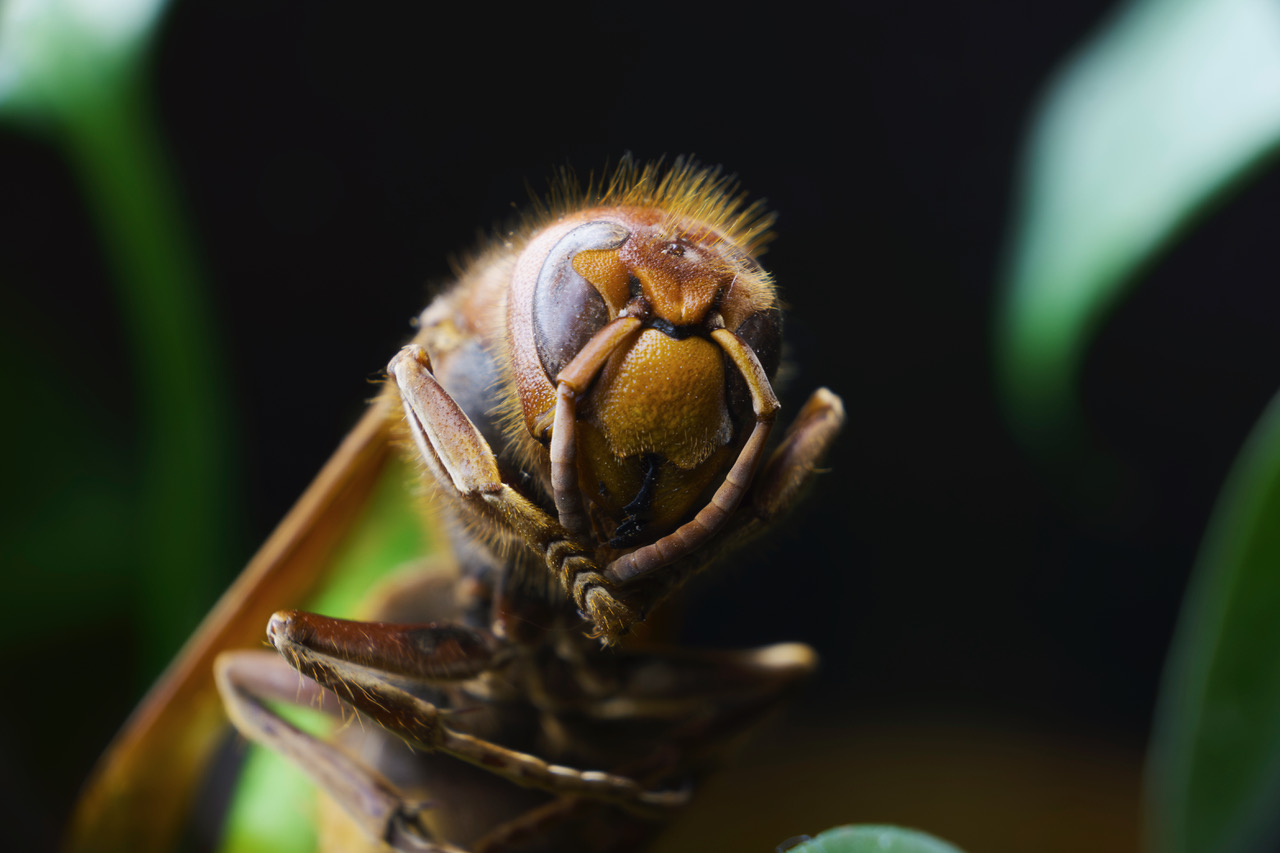
24 Mar Asian Hornets in Europe: Why Vespa velutina Is a Serious Threat to Honey Bees
Across Europe, beekeepers are increasingly concerned about a new predator threatening honey bee colonies: the Asian hornet (Vespa velutina). Originally native to Southeast Asia, this invasive species has spread rapidly across several European countries during the past two decades. Its arrival represents a serious ecological challenge not only for honey bees but also for the pollination systems on which a large part of our food production depends.
How the Asian Hornet Arrived in Europe
The Asian hornet was first recorded in Europe in 2004 in France. Scientists believe it arrived accidentally through international trade, most likely inside cargo shipments from Asia. Since then, the species has spread across many regions including Spain, Portugal, Italy, Belgium and the Netherlands. According to the European Commission, Vespa velutina is now classified as an invasive alien species of concern within the European Union.
Why Asian Hornets Are Dangerous for Honey Bees
Asian hornets are extremely efficient predators of honey bees. They frequently hover in front of hive entrances, capturing worker bees returning from foraging trips. After killing the bee, the hornet removes the thorax, which contains the flight muscles, and feeds this protein-rich part to its larvae. Scientific studies have shown that a single hornet colony can consume thousands of bees during one season, creating enormous pressure on already vulnerable bee populations.
European Bees Are Less Adapted to This Predator
In Asia, local bee species evolved alongside this predator and developed defensive strategies. Some Asian bees can surround the hornet and generate heat by vibrating their muscles, creating what scientists call a ‘heat ball’ that can kill the predator. European honey bees (Apis mellifera) did not evolve with this species and therefore lack equally effective defensive behaviour. This makes European bee colonies particularly vulnerable to Asian hornet attacks.
Are Asian Hornets Dangerous for Humans?
Asian hornets are generally not aggressive toward humans when they are far from their nests. However, like other hornet species, they can become defensive if their nest is disturbed. Their sting is painful and can cause allergic reactions in sensitive individuals. Because nests can contain several thousand hornets, accidental disturbance of a nest may present a risk. Fortunately, attacks on humans remain relatively rare.
Why This Matters for Pollinators and Food Systems
Honey bees and other pollinators play a crucial role in agriculture and biodiversity. A large proportion of fruit, vegetable and seed production depends on insect pollination. When invasive predators such as the Asian hornet reduce bee populations, the consequences extend beyond honey production and can affect entire ecosystems and food systems.
Sources
European Commission – Invasive Alien Species List
https://ec.europa.eu/environment/nature/invasivealien/list/index_en.htm
Scientific study on Vespa velutina predation on honey bees
https://www.sciencedirect.com/science/article/pii/S0006320712002572

Sorry, the comment form is closed at this time.